































Driving licence checks for employers: a guide for fleet operators
Last Updated: 11 November 2026 Read time: 9 min Expert: Lee Evans Business & Leisure Insurance Expert Author: Katie Gawley…

A fleet policy for heavy goods vehicles insures several lorries run by one business under a single motor policy that renews on one date. It’s built for operators with vehicles over 3,500kg, and many insurers will add the firm’s vans and cars too.
The minimum the law allows is third party cover, for any vehicle used on roads and other public places (Road Traffic Act 1988, section 143). Quotezone compares quotes for lorry fleets from 25+ providers on its fleet panel, so one form reaches insurers who write heavy vehicles.
There were 521,099 heavy goods vehicles licensed in the UK at the end of June 2026 (DfT vehicle licensing statistics). Many belong to businesses that run several at once, and those firms are who this cover is designed around.
Moving customers’ freight for payment is what GOV.UK describes as hire or reward work. Your policy needs to show that use, and the load itself is usually insured on its own.
Builders’ merchants, farms, retailers and manufacturers often run lorries to move their own stock. That still calls for an operator’s licence, often a restricted one, plus business use on the policy.
If your lorries share a yard with vans, pick-ups or company cars, many insurers can list them on one schedule. Others would rather keep the heavy vehicles on a separate policy.
No law sets a minimum fleet size. Many insurers will quote from two or three lorries, and some start at five.
On most fleet policies you pick a level of cover for each vehicle, and the schedule lists every lorry, trailer and driver group. Terms vary between insurers, so check the wording of each quote.
Pays for injury to other people and damage to their property. It’s the legal minimum, and repairs to your own lorry aren’t included (GOV.UK).
Adds protection when a lorry or tractor unit is taken by thieves or burnt out. Trailers are often listed separately, so check each one is named.
Also pays towards damage to your own vehicles after an accident, including one your driver caused. Lease and finance agreements may require it, so check yours.
Insurers decide their own any-driver terms for lorries. A minimum age is common, frequently 25, along with a set time holding a full licence. A few will take younger drivers at a higher price.
On the motor policy, carrying goods for payment is its own type of use. It protects the lorry and driver on paid work, but the freight itself usually needs a separate policy.
If your lorries run to Europe, ask whether the policy extends abroad and for how long. There may be a cap on the number of trips, or an extra charge.
A motor fleet policy insures the vehicles, the drivers and the people they might injure. Several other risks a haulier faces need cover of their own.
The freight you carry is normally insured under goods in transit cover, bought as a separate policy or an add-on. Customers’ contracts may set the limit they expect.
Most employers need employers’ liability insurance with a limit of £5 million or more, starting the day they become an employer. GOV.UK says an employer can be fined £2,500 a day for not being properly insured (GOV.UK).
Public liability insurance deals with injury or damage to members of the public from your business work away from driving, such as loading at a customer’s site. Customers may ask to see it.
Moving a broken-down HGV takes heavy recovery kit. Commercial breakdown cover can be added, so look at the weight limits in its terms.
A goods vehicle operator’s licence is needed in Great Britain to carry goods in any vehicle plated above 3,500kg gross (GOV.UK). Where a vehicle has no plated weight, the trigger is an unladen weight over 1,525kg. DVSA runs the scheme for the traffic commissioners (GOV.UK). Insurers quoting for HGVs will usually ask for your licence number and type, and our operator licensing guide explains how to apply.
For your own goods only. It doesn’t let you carry other people’s goods (GOV.UK).
Covers your own goods in the UK and abroad, plus other people’s goods within the UK.
Lets you carry your own and other people’s goods in the UK and on international trips. Vans over 2,500kg need one too when they carry for payment anywhere in the EU, or in Norway, Iceland, Switzerland or Liechtenstein (GOV.UK).
Operator licensing there is handled by the Department for Infrastructure, and the rules aren’t the same as in Great Britain (nidirect).
Your insurer will ask what each driver is entitled to drive, so match drivers to vehicles before you request quotes. Licence categories are set out differently for Northern Ireland (GOV.UK).
Category C1 lets a driver take a lorry weighing between 3,500kg and 7,500kg maximum authorised mass, towing 750kg at most (GOV.UK).
Category C is for any vehicle over 3,500kg, with the same 750kg limit on a trailer.
Category CE lets a driver pull a trailer over 750kg behind a category C vehicle. Ask drivers to confirm the exact categories on their licence.
Most professional lorry drivers need a Driver Certificate of Professional Competence. To keep it, they complete 35 hours of periodic training in each 5-year period, and driving without it risks a £1,000 maximum fine (GOV.UK). The HGV licence itself is renewed every 5 years, then each year from age 65 (GOV.UK).
A driver can give you a check code. With that and the last eight characters of their licence number, you can view their entitlement and any points (GOV.UK). Insurers may ask how often you check.
Employers must manage the health and safety risks to staff who drive for work. HSE says that law applies on the road just as it does at a fixed workplace (HSE).
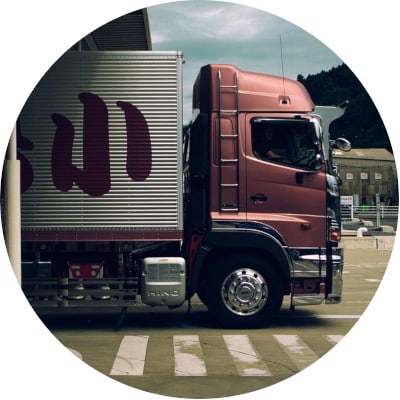
Most goods vehicles and combinations over 3.5 tonnes come under the assimilated rules, the set GOV.UK used to call the EU rules (GOV.UK).
Under them a driver may drive up to 9 hours a day, or 10 hours on two days of the week. Weekly driving stops at 56 hours, and at 90 hours across any fortnight (GOV.UK).
That driving has to be recorded on a tachograph (GOV.UK). Lighter goods vehicles in Great Britain follow the domestic rules instead: 10 hours at the wheel and 11 hours on duty a day (GOV.UK).
Breaking the rules can lead to prosecution or a fine, and Northern Ireland has its own version (GOV.UK). You may be asked how you review tachograph records as part of the quote.
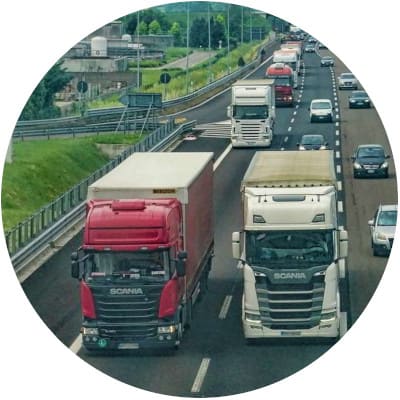
A car licence stretches further than many people expect. Anyone who passed a car test since the start of 1997 can drive category B vehicles up to 3,500kg maximum authorised mass.
That limit rises to 4,250kg for electric or hydrogen vehicles (GOV.UK). Hybrids stay at 3,500kg.
So a single fleet often has two groups of drivers: car-licence holders for the vans and cars, and C1, C or CE holders for the lorries. Tell the insurer who drives what, so the any-driver terms match how you work.
Many insurers will write vans and lorries on one policy, while others quote the heavy vehicles separately. If most of your vehicles are cars and vans, the multi car and van page or the mini fleet page may suit you better.
Running one lorry rather than several? Our truck insurance page covers a single vehicle, and haulage insurance looks at firms moving customers’ freight.
There’s no standard price for a lorry fleet. Each insurer weighs the same broad factors in its own way, so several quotes show you the spread. Our pricing guide for fleets explains each factor in more detail.
Fleet premiums usually follow the claims your business has made as a fleet, not each driver’s personal record. A proven fleet record may earn credit when you move, so ask before switching.
Gross weights, body types, values and the mix of tractor units, rigids and tippers all feed into the rating. So does the work: hire and reward haulage, own-goods distribution, multi-drop and international journeys are each rated differently, as are the areas and hours your lorries run.
Ages, licence categories, points and how long each driver has held entitlement. Younger or newly qualified drivers usually push the premium up.
Locked yards, immobilisers, trackers and cameras may lower what some insurers charge. Our telematics guide explains how journey data is used.
IPT is added to general insurance premiums. Since 1 June 2017 the standard rate is 12%, and some vehicle insurance falls under the higher 20% rate (HMRC). Ask your broker or insurer which rate applies to your policy.
Because lorries are insured under a business contract, the Insurance Act 2015 makes you present the risk fairly to the insurer before the policy begins (legislation.gov.uk). A deliberate or reckless breach gives the insurer the right to avoid the policy altogether and reject every claim (legislation.gov.uk).
Each policy gets logged by the insurer on MIB’s Motor Insurance Database, and MIB says a new policy must be uploaded within seven days of purchase (MIB). Lorries joining or leaving the fleet usually have to be reported to the insurer by you or your broker.
If an uninsured vehicle hasn’t been declared as off the road, its registered keeper can be fined £100 under continuous insurance enforcement. The vehicle can be clamped, impounded or destroyed, and a court can impose up to £1,000 (GOV.UK).
A driver caught using a vehicle they aren’t insured to drive can be handed a £300 fixed penalty with 6 points on their licence. At court there’s no upper limit on the fine, and disqualification is possible (GOV.UK).
After an incident, tell your insurer quickly and keep tachograph, camera and witness details. Our fleet claims guide sets out the steps from the roadside onwards.
A haulage business carries risks that a motor policy doesn’t touch. These three often sit alongside a lorry fleet policy.
You’ll fill in one form with your vehicles, drivers, claims history and the work your lorries do. Quotezone matches your details with fleet insurers and brokers, drawn from 25+ providers, who quote for heavy vehicles. Get quotes for your lorry fleet. Running mostly cars and vans? Start on the main fleet insurance page.

Reviewed by: Lee Evans
Business & Leisure Insurance Expert
Written by: Katie Gawley
Insurance Content Writer
Fact-checked by: Quotezone Editorial Team
This content follows our Editorial Guidelines
Last Updated: 11 November 2026
Easy application and appropriate cover
Abimbola tejumade Adewuyi
Verified Reviewer
Easy to use system, fast response offers good cover and competitive pricing
Phil Roberts
Verified Reviewer
4.83/5 from 18 customer reviews
Last Updated: 11 November 2026 Read time: 9 min Expert: Lee Evans Business & Leisure Insurance Expert Author: Katie Gawley…

Fitting telematics to a fleet typically cuts the insurance premium by 5-15% on day one, and a further 5-10% at…

Any-driver fleet insurance covers anyone meeting the policy criteria but costs 20-40% more than named-driver cover, where each authorised driver…

Most fleets running goods vehicles over 3.5 tonnes or carrying passengers for hire need an Operator’s Licence from the Office…
INDG382 is the HSE leaflet that sets out how UK employers must manage the road-safety risk of staff who drive…

Adding a new vehicle to a fleet policy usually takes minutes through your insurer’s portal, but the steps and timings…